Honda is getting ready to switch off its engines as part of a radical restructuring leading to an all-electric future. The Japanese automaker has already cut its domestic auto production capacity to just over 800,000 vehicles a year, down by around 40% from its 2002 peak.
Most of the retrenchment has come by halting production of finished cars at its plant in Sayama, Saitama Prefecture, northwest of Tokyo, at the end of last year. Honda also announced other cost-cutting steps including adopting a new vehicle development system and pulling the plug on its Formula One racing program.
The company is retooling its manufacturing operations in line with its vision for the future. It has announced that it its entire lineup of cars will be electrified by 2040. On 27th December 2021, a “line-off ceremony” was held at the Sayama plant to mark the end to production of finished cars. While only a few executives attended the ceremony due to COVID-19 restrictions, the event was livestreamed to allow workers in different parts of the plant to watch the proceedings.
Honda President Toshihiro Mibe: “Like you, I will miss it [Sayama plant] all. However we will continue making automobiles that meet the needs of consumers at home and abroad.”
The Sayama plant, which has been operational since 1964, rolled out cars that defined Honda, including the Civic, with its innovative low-emission engine, and the Accord, Honda’s flagship sedan. The facility will remain open for now, making parts, but will close completely in two to three years. Its operations will be transferred to Honda’s Yorii plant, also in Saitama, to lower Honda’s fixed costs and raise operating rates. Many of the workers from the Sayama plant will be reassigned to Yorii and elsewhere. The company has yet to decide what to do with the site after the Sayama plant shuts down.
The factory could once turn out 250,000 cars a year. Until the end of 2021, Honda had a domestic production capacity of around 1 million finished cars annually (combined) at its three Japanese plants in Sayama, Yorii and another in Suzuka, in central Japan’s Mie Prefecture. The company’s total capacity has since shrunk to slightly more than 800,000 vehicles a year, at Yorii, Suzuka and Honda Auto Body in Yokkaichi, Mie Prefecture.
In the early 2000s, Honda could crank out more than 1.3 million cars a year. The company actually produced 840,000 vehicles in Japan in 2019, before the COVID-19 pandemic took hold. That is slightly more than the automaker’s capacity for this year. But Honda appears able to ramp up to around 900,000 vehicles, if necessary. It is now focused on improving productivity by raising the operating rate of its factories as high as possible.
Toyota Motor, by contrast, has no plan to sharply reduce its capacity in Japan, sticking to its policy of maintaining domestic production of more than 3 million cars a year. Nissan Motor’s capacity in Japan remains around 1.34 million vehicles, Honda’s capacity is now far below than that of its two rivals.
One factor behind Honda’s relatively small-scale manufacturing in Japan is that the Japanese market makes up a smaller share of its global sales compared with its competitors. In fiscal 2018, Honda sold 740,000 vehicles in Japan, or 14% of its global sales. Toyota’s domestic sales of 2.29 million vehicles accounted for 22% of its global total.
On the other hand, Honda sold 1.61 million vehicles in the U.S. market, or 30% of its overall sales, and 1.46 million cars in China, or 28%. Because of the large proportion of overseas sales, Honda has a more globalized production system: Cars sold in Japan are not necessarily manufactured in the country. It makes the Accord in Thailand, for example.
“Ending production of finished cars at the Sayama plant could leave Honda with much smaller domestic capacity to manufacture such midsize or large vehicles as the Accord and the Odyssey, which used to be made at the plant,” said Seiji Sugiura, a senior analyst at Tokai Tokyo Research Institute.
The importance of the U.S. and Chinese markets to Honda’s global sales has spurred the automaker to phase out production of combustion engine cars by 2040. Japanese carmakers have been relatively slow to electrify because the network of charging stations is underdeveloped in Japan, and renewables make up a small share of the country’s energy supply.
Consumers will remain reluctant to embrace electric vehicles as long as charging facilities are not widely available. Switching to EV technology to cut greenhouse gas emissions does not make much sense if the electricity is generated with fossil fuels. Meanwhile, in the U.S., a number of competitive EV makers have emerged, such as Tesla and Rivian Automotive. President Joe Biden’s administration is promoting the development of EVs.
The Chinese government has also lavished subsidies on manufacturers as it tries to build an EV industry from scratch. As a result, Chinese drivers can now buy small EVs for around 500,000 yen ($4,300). With its solid presence in both the U.S. and Chinese markets, Honda is in a better position than other Japanese carmakers to shift to EVs.
The Sayama plant once served as Honda’s “mother factory,” introducing a range of state-of-the-art technologies. Engineers at the plant were sent around the world to help get new Honda production lines up and running. Now the Yorii plant, which came on stream in 2013, will fulfill this role. The plant has been at the forefront of the company’s EV ambitions. It makes the Honda e, the company’s first all-electric commercially available vehicle.
The biggest story for Honda in 2021 was its commitment to an all-electric future. But the automaker also pushed through a drastic reform of its car business. That had become less profitable, posting a dismal operating profit margin of 1% in the year through March 2021. The weak numbers prompted Honda to revamp its manufacturing worldwide, including at the Sayama plant.
The company’s global capacity is projected to fall to 5.14 million vehicles for the year ending March, down from 5.59 million cars a year earlier, due in part to the closure of plants in the U.K. and Turkey.
The end of production of finished cars at the Sayama plant is a milestone in Honda’s restructuring of its automobile business. The realignment of its global network of factories smooths the way into the second phase: becoming a highly efficient and competitive EV manufacturer. This will likely call for still more cost-cutting and efficiency.
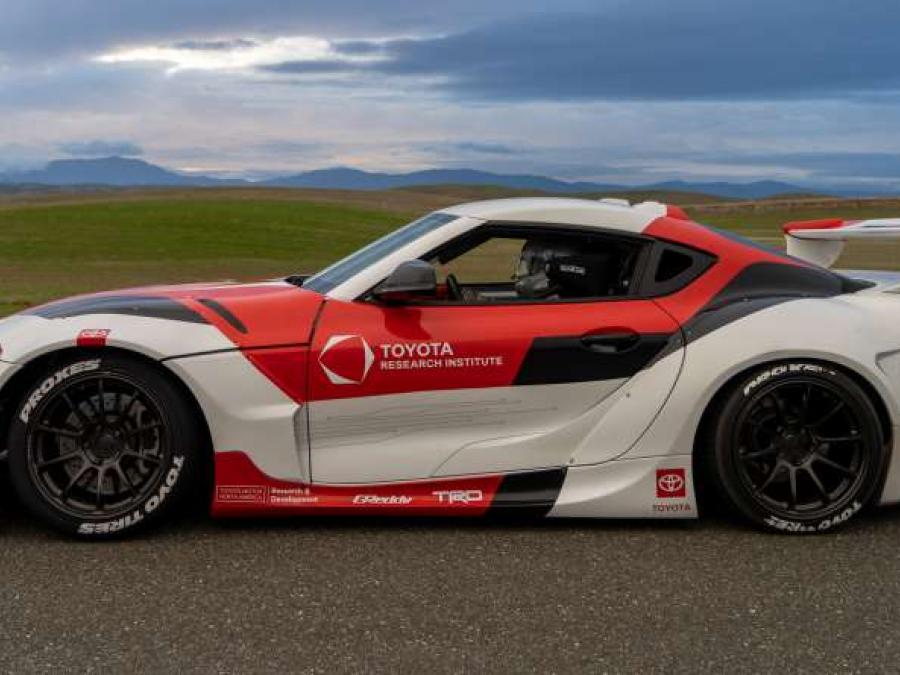
Computer assisted technologies during recent years have enabled automakers to achieve leaps & bounds in vehicle safety. The latest example comes from Toyota Research Institute (TRI) which has developed world’s first autonomous drifting technology that can help vehicle maneuver its way out of danger, animatedly like a professional race car driver does.
TRI started the work a year ago in collaboration with USA’s Stanford University’s Dynamic Design Lab, with the idea of not creating an exhilarating auto-drifting car but to push active safety technology to the extremes, mimicking professional driver-level maneuvering in a way that could avoid crashes and prevent fatalities. The research scientist at TRI, Jonathan Goh explains:
“When faced with wet or slippery roads, professional drivers may choose to ‘drift’ the car through a turn, but most of us are not professional drivers. That’s why TRI is programming vehicles that can identify obstacles and can autonomously drift around these obstacles on a closed track.”
By building skills comparable to an expert driver, the newly developed technology can amplify and augment a regular driver’s ability to respond to dangerous and extreme situations, helping keep people safe on the road. A programmed Toyota GR Supra autonomously drift around obstacles at the Thunderhill Raceway, successfully demonstrating this technology. TRI’s algorithms activate and control drifting using the computer-operated steering, throttle, clutch displacement, sequential transmission and individual wheel braking equipped to the Supra research vehicle. The suspension, engine, transmission and safety equipment have been upgraded close to Formula Drift spec in order to operate the experiment safely under controlled conditions and collect data.
Commenting on this, Avinash Balachandran, senior manager of TRI’s Human Centric Driving Research said:
“At TRI, our goal is to use advanced technologies that augment and amplify humans, not replace them. Through this project, we are expanding the region in which a car is controllable, with the goal of giving regular drivers the instinctual reflexes of a professional race car driver to be able to handle the most challenging emergencies and keep people safer on the road.”
However, drifting on a closed 3.2-km stretch of track with defined obstacles is vastly different from doing so on a roadway with unidentified hazards and traffic, so it will be interesting to see if the auto-drift assist technology is packaged with mainstream Toyota cars in near future. However, Toyota says it plans to continue research into how automated tech can help “amplify human capabilities on the road,” including in extreme situations that push the limits of vehicular capability.

Italian sports car maker Lamborghini has announced that 2022 will be the final year it offers pure combustion-engined cars. Starting from next year, the automaker will begin selling plug-in hybrid models, and all of its offerings will be electrified by 2024.
In an interview with Bloomberg, CEO Stephan Winkelmann said:
“2022 will be the last time that we only offer combustion engines.”
Lamborghini’s first production PHEV is said to be unveiled later this year, which is among four new planned product launches. The company has allocated record 1.5 billion euros for its electrification phase, including an all-electric Lamborghini that’s scheduled to be released after 2025. Lamborghini is also working on the final design for its first EV, while Winkelmann said the company is leaning toward a four-door model suited for daily use.
Meanwhile, the CEO said Lamborghini has nearly sold out its entire production run for 2022, on the back of record deliveries and demand in 2021 as the company delivered 8,405 vehicles globally in 2021.


-

[news] How exotic V8, V12 and even V16 engines a ...
6777777777777777777nPosted by ninja 5 months ago -
-
[news] How exotic V8, V12 and even V16 engines a ...
6777777777777777777777777777Posted by 67 5 months ago -
[news] WEF: The end of the personal car is coming
This is tyranny if ever I heard it. There is no gl [more ...]Posted by Micky 1 year ago -
[news] The new Moskvich 3 gets a new name, petro ...
Nice utüg, congratulations if you can drive itPosted by Mosque Witch 3 years ago -
[news] The new Moskvich 3 gets a new name, petro ...
Battery electric?! Hasn't Russia learned any less [more ...]Posted by Sagradamoly 3 years ago -
[news] An American put a chip on his hand to mak ...
Great article!Posted by Bobby Brown 4 years ago -
[news] Tesla Asks Drivers To Post Fewer Clips Wi ...
Tesla's autopilot needs many more improvementsPosted by Tesla driver 5 years ago