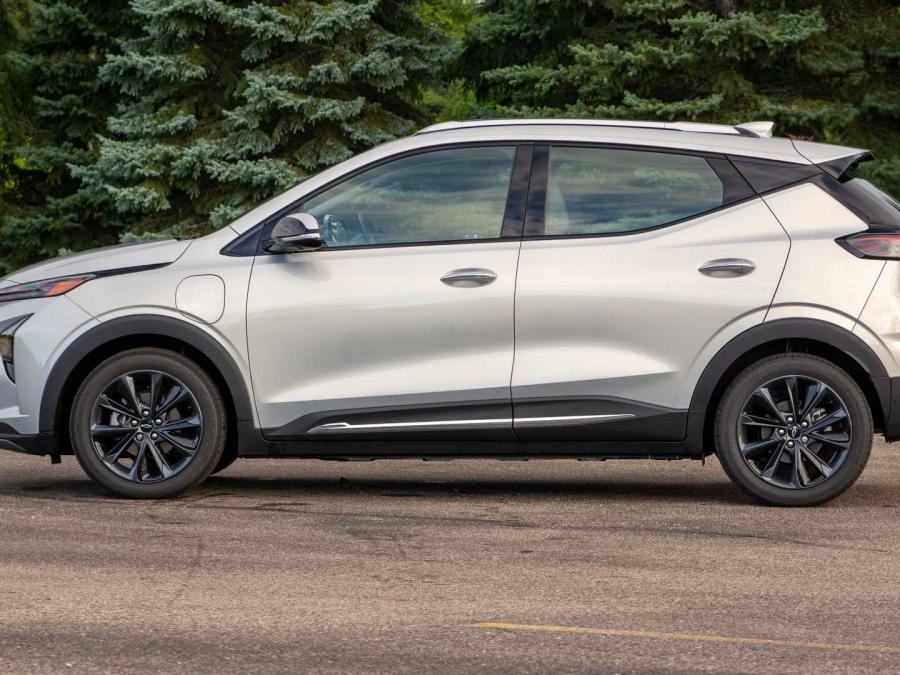
The Bolt EUV’s $35,000 starting price, 247-mile range, and excellent driving character are more than enough to overshadow a flimsy cabin.
The current EV market moves damn fast. Every week seems to come with a new story about a long-range, quick-charging electric car that has blistering performance and bleeding-edge technology. But like so many things in life, the folks that are gobbling these new vehicles up are paying for much more capability than they really need.
With nearly 250 miles to a charge, a roomy cabin for four adults, and a starting price below $40,000, the 2022 Chevrolet Bolt EUV is exactly as much EV as most people need and not an ounce more. That makes it an unquestionably boring choice – because being responsible is almost always boring – but Chevrolet's first electric crossover is an undeniably smart value, even if it falls well short of the current crop of electric crossovers in a few key ways.
The Bolt EUV accompanied the refresh of the standard-issue Bolt EV, adopting the cleaner, smoother fascia that came out last year. A closed-off grille with a body-color insert and slim running lights with integrated LED turn signals presents a more modern, assertive face, while a gloss-black strip ties together slimmer taillights. At the back, an uncomfortably high bumper and a perilously short overhang conflict with a ride height that still awkwardly straddles hatchback and crossover.
Chevy's 2022 model year refresh saw a sizable overhaul to the Bolt's cabin. A new Honda-style gear selector highlights the updated floating center console, and overall material quality is up across the board. But while soft-touch plastics on the dash are a welcome addition, I never got the sense the cabin was screwed together with much care. The power locks operate with a metallic “thunk” that echoes through the cabin and flicking the flimsy turn signal stalk has a similar effect. At the same time, my test car's gray/gray/white color scheme looks as dull and over-sanitized as a hospital waiting room.
For a vehicle that's a mere 14.1 feet long, the Bolt EUV is a roomy thing. Passengers in both rows have as much or more leg and headroom as a Chevy Equinox, which is over a foot longer and three inches wider. At the same time, there's ample cargo space, with a false floor expanding the hold to below the rear bumper. Loading is a bit of a pain, owing to the high clearance and narrow tailgate, but that's a minor annoyance.
The Bolt EUV's ride is suitably isolated on rough roads, although it never feels especially plush or pleasant in other situations. Basically, this car rides as good as it needs to, which is the highest praise I can muster for a primitive torsion-beam rear end. Wind noise is more of an issue than tire roar – those big side-view mirrors are great for visibility, but not much else – but the Bolt EUV is as good in either metric as any other $35,000 hatchback.
Every Bolt and Bolt EUV comes with an 8.0-inch digital instrument cluster and a 10.2-inch touchscreen above the center stack with wireless Apple CarPlay and Android Auto. The touchscreen's software has a dedicated home screen and a smartphone-inspired collection of icons for navigation. Response times are quick, although the color palette is uninteresting. That's a shame, as the graphics are fantastic.
That's doubly true of the digital cluster, which feels like something engineers designed specifically for the Bolt. A predictive range gauge on the left and a power graph on the right are crystal clear and unfussy tools for efficient driving. The use of green and yellow for conveying efficiency information isn't new, but it's an ideal solution for an EV.
I mean, are you surprised? Tasking a mere 200 horsepower and 266 pound-feet of torque with 3,700 pounds of weight is not a recipe for rapid acceleration. Yes, the Bolt generates all its twist from a standstill and that makes it feel downright nippy in places where the speed limit won't crest 35 miles per hour. Put the EUV on an interstate and its tendency to run out of steam shortly after calling for more power is tiresome.
Handling isn't a highlight either. The Bolt is only ever happy when driven gently. The lone highlight are the brakes. If you do decide to dip into the bigger pedal, the results are easy to predict, unlike a lot of regenerative systems.
The Chevrolet Bolt EUV is the most affordable vehicle with a hands-free driving aid in the United States. My road trip with the Bolt included 284 miles of freeway driving and I used Super Cruise for at least 90 percent of that time. It was flawless, with none of the annoying ping-pong behavior I experienced the last time I used Ford's rival, Blue Cruise.
While the Bolt EUV’s range is competitive with the other single-motor models in the segment, its 55-kilowatt DC charge rate is both well below the 150-kW target we set for this segment and easily the worst of any comparable vehicle.
The Bolt EUV makes its strongest case based on price (and 2023 models will be stronger still). The LT trim is available for $34,495, including a $995 destination charge. The Premier adds $4,400 to that figure, for a starting price of $38,995. While GM burned through its income-tax credits years ago, the EUV still undercuts most comers.
My tester carried the $5,430 Launch Edition package, which basically combines the $2,200 Super Cruise package and $2,495 Sun and Sound pack (navigation, panoramic sunroof, Bose audio) black 17-inch wheels and an illuminated charging port. The as-tested price was $43,495 and included a $430 discount for the Launch Edition. The Sun and Sound pack feels like a poor value, considering the standard wireless CarPlay. Super Cruise is a must-have, though, and at $2,200, it pushes the EUV's price just a hair above $40k. That's a damn fine price for an EV with 247 miles of range that will basically drive itself.

A Tesla Model 3 failed an emergency braking test in front of a child dummy crossing the road.
The Dawn Project, funded by O'Dowd, tested the car under controlled conditions at the Willow Springs International Raceway in California.
The latest beta version of Tesla's Full Self-Driving (FSD) software repeatedly ignored the presence of a child-sized dummy on the road and ran it over at an average speed of 40 km/h.
The video was posted by Dan O'Dowd, a security engineer and longtime critic of Elon Musk's company.
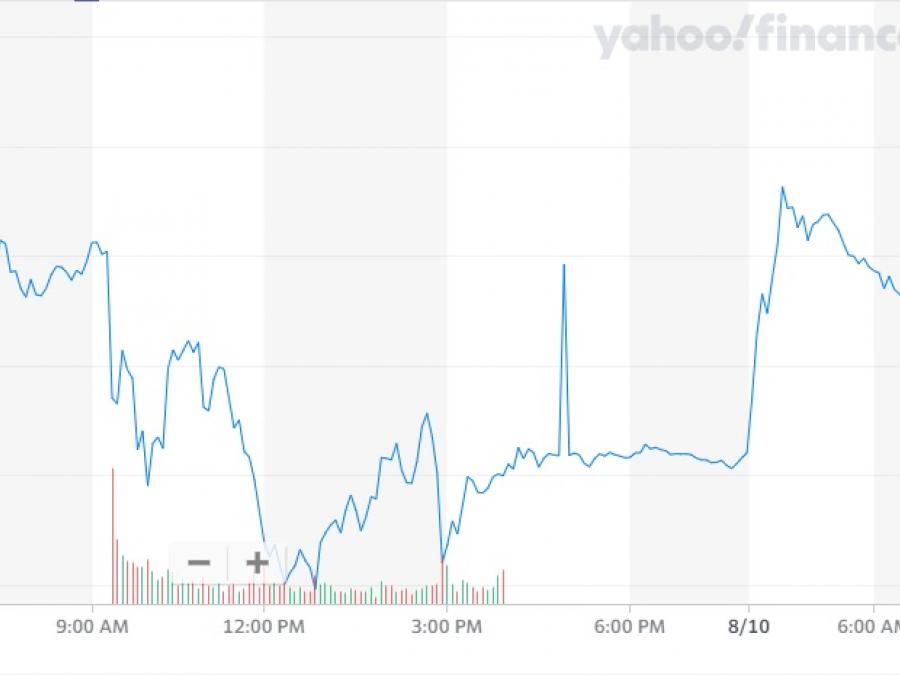
Tesla CEO says the funds could be used to finance a potential Twitter deal if he loses the legal battle with the social media platform.
esla CEO Elon Musk sold $6.9 billion worth of shares in the EV maker, explaining that he could use the funds to finance a potential Twitter deal if he is legally forced to complete the $44 billion takeover of the social media platform.
According to several SEC filings dated August 4, 8 and 9, Musk sold a total of 7,924,107 Tesla shares worth about $6.9 billion in total at a weighted average price of $869,09. After this latest sale, Elon Musk now owns 155.04 million Tesla shares or just under 15 percent of the automaker, according to Reuters calculations.
This brings total Tesla stock sales by Musk to about $32 billion in less than one year. Asked by Tesla pundit Sawyer Merritt on Twitter if he was done selling, Musk confirmed and explained why he made the move.
"Yes. In the (hopefully unlikely) event that Twitter forces this deal to close *and* some equity partners don't come through, it is important to avoid an emergency sale of Tesla stock."
Obviously, that did not happen as Musk has now sold another massive batch of shares. According to Reuters, legal experts have seen this coming and predicted Musk would sell more Tesla shares if he was forced to complete the acquisition or settle the dispute with a stiff penalty.
In early July, the billionaire tore up his April 25 agreement to buy Twitter for $44 billion, claiming he was misled about the number of spam accounts—the so-called bots—on the social media platform.
Twitter dismissed his claim as buyer's remorse in the wake of a plunge in technology stocks and sued Musk to force him to complete the transaction. The two sides will head to trial on October 17.
In light of Musk's Tesla stock sale, Wall Street is now seeing the chances of a Twitter deal more likely, Wedbush securities analyst Dan Ives suggested in a tweet, calling the Tesla CEO's action a "poker move."
By: Dan Mihalascu


-

[news] How exotic V8, V12 and even V16 engines a ...
6777777777777777777nPosted by ninja 5 months ago -
-
[news] How exotic V8, V12 and even V16 engines a ...
6777777777777777777777777777Posted by 67 5 months ago -
[news] WEF: The end of the personal car is coming
This is tyranny if ever I heard it. There is no gl [more ...]Posted by Micky 1 year ago -
[news] The new Moskvich 3 gets a new name, petro ...
Nice utüg, congratulations if you can drive itPosted by Mosque Witch 3 years ago -
[news] The new Moskvich 3 gets a new name, petro ...
Battery electric?! Hasn't Russia learned any less [more ...]Posted by Sagradamoly 3 years ago -
[news] An American put a chip on his hand to mak ...
Great article!Posted by Bobby Brown 4 years ago -
[news] Tesla Asks Drivers To Post Fewer Clips Wi ...
Tesla's autopilot needs many more improvementsPosted by Tesla driver 5 years ago